Flood Damage Cleanup in Huntsville, AL
Flood damage cleanup in Huntsville addresses water that has entered a property from outside or from a major indoor source and spread across floors, into walls, and beneath materials. Because floodwater sources vary — storm runoff, roof intrusion, plumbing failure, or overflow — the contamination level and cleanup approach differ each time. Huntsville Water Damage Restoration provides 24/7 flood water removal and drying across Huntsville, AL 35810 and surrounding communities.
Flood Water Removal Near Huntsville Properties
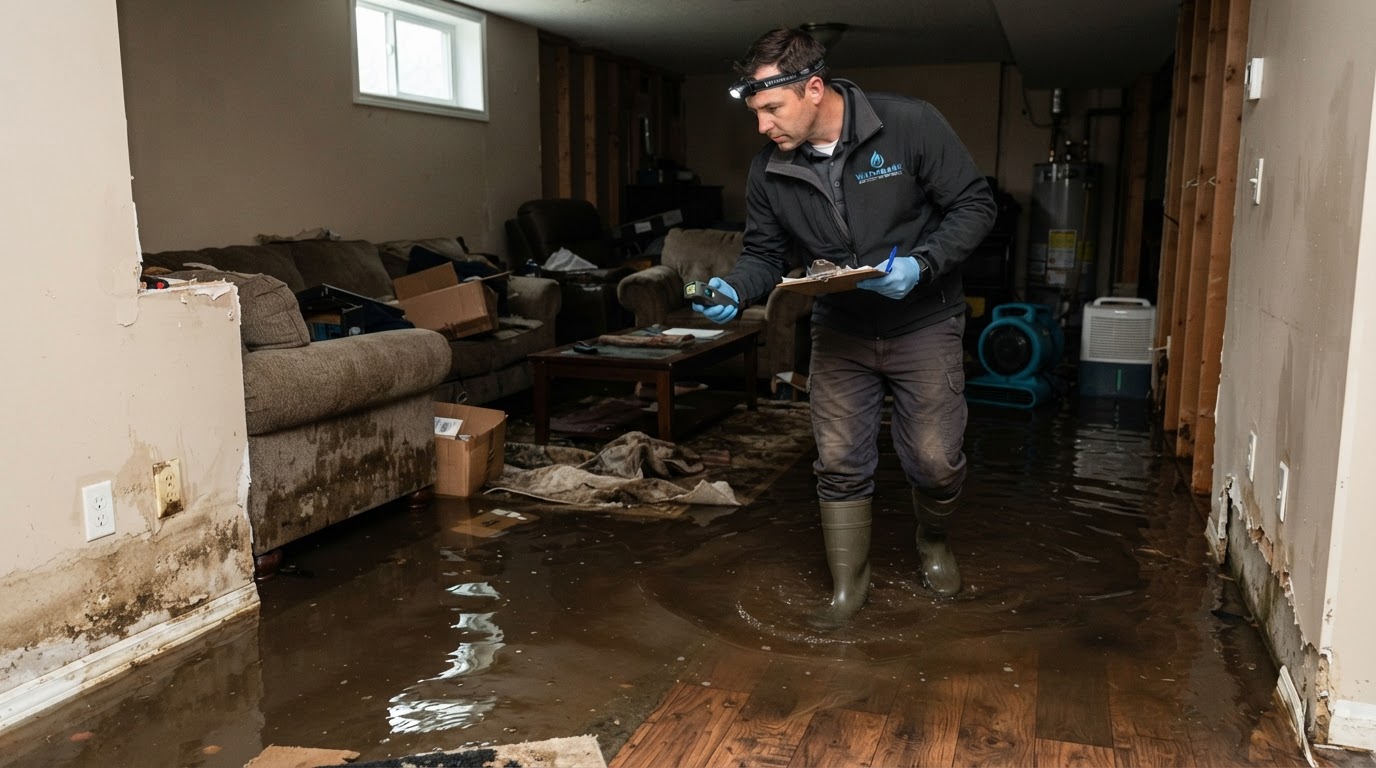
A flooded room is different from a small leak. The volume of water is higher, it usually covers more of the floor area, and it often carries debris, soil, or other contaminants depending on where it came from. Floodwater that traveled through soil, storm drains, or across exterior surfaces may carry different contamination concerns than water from a clean indoor supply line — and the cleanup reflects that difference.
Flood cleanup starts with safety. Before anyone enters a flooded space, the electrical hazard, depth of the water, and the source must be understood. Standing floodwater is then removed, saturated materials are assessed, and the structure is dried. Contaminated materials are handled with appropriate care and, when needed, removed rather than simply dried.
Common situations we address include:
- Heavy rainfall that overwhelms drainage and pushes water under doors
- Storm runoff entering through low foundation vents or slab openings
- Roof leaks that funnel large volumes of water into one interior area
- Window or door failures during wind-driven rain
- Plumbing failures that release enough water to flood multiple rooms
- Overflow from a toilet, tub, or appliance that spreads well beyond the source
Common Causes of Flood Damage in Huntsville Properties
Not every flood comes from a natural disaster. In Huntsville, much of the indoor flooding we respond to is a combination of weather and building conditions — a storm that exposes a weak point, or drainage that can't keep up with a hard downpour.
Weather-Related Causes
- • Heavy sustained rainfall saturating the ground
- • Flash flood runoff from nearby slopes or roads
- • Wind-driven rain through roof or wall openings
- • Clogged gutters directing water toward the foundation
Building-Related Causes
- • Roof penetrations or aging flashing
- • Door or window seal failures
- • Large plumbing failures inside the building
- • Appliance or supply-line overflows
Long-tail searches like "house flooded," "room flooded," and "water entering home" almost always point to one of these combinations. Whether the water came from outside or in, the priority is the same: remove it quickly and begin drying before secondary damage sets in.
Flood Cleanup, Water Removal & Drying Process
Flood cleanup follows a deliberate sequence because skipping a step invites lingering moisture and contamination. The process adapts to the source and how far the water traveled.
RESPOND & ASSESS
Confirm safety, identify the source, and judge contamination level.
REMOVE
Pump and extract the standing floodwater from floors and materials.
DRY
Set controlled drying to remove moisture from framing and subfloors.
RESTORE
Clean where appropriate and plan repairs for dried areas.
Contaminated floodwater changes the plan. Porous materials that absorbed contaminated water may need to be removed rather than dried in place, and affected areas are cleaned with appropriate care. For clean-water flooding the priority is speed of removal and drying; for contaminated water, safety and removal of unsalvageable materials come first. See our sewage backup cleanup page for contaminated-water specifics.
Hidden moisture is the most common reason flood damage resurfaces later. Water that traveled under baseboards and into wall cavities is not visible from the room, so drying is monitored until affected materials reach appropriate moisture targets.
Why Professional Flood Cleanup Matters Near Huntsville
The risk after flooding is rarely the water you can see — it is the moisture that stays behind. Wet drywall continues to wick water upward, subfloors stay saturated, and damp wall cavities hold moisture that surface drying never touches. Left alone, that leads to swelling, warping, staining, odors, and material deterioration.
Organized flood cleanup separates visible water from remaining moisture and from hidden moisture. Removing the pooled water is one task; drying the structure is another; restoring finishes is a third. Skipping ahead to restoration before the structure is dry is how problems return months later as warped flooring or stained ceilings.
For storm-driven flooding, our storm and flash flood restoration page covers the weather-specific angles. When the flood included sewage or contaminated water, see sewage backup cleanup. For the bulk-removal step itself, emergency water extraction applies. You can also read more on our About page or call directly through the Contact page.
Active water emergency in Huntsville?
The sooner water is removed and drying begins, the less secondary damage there is to address.
Frequently Asked Questions About Flood Damage Cleanup in Huntsville
Flooded Property in Huntsville? Call for Water Damage Help
Huntsville Water Damage Restoration provides 24/7 water removal, extraction, and structural drying across Huntsville, AL 35810 and surrounding North Alabama communities.
Serving Huntsville, AL 35810 and surrounding North Alabama communities.
Request Help
Fill out this quick form for fast contact from our dispatch team.