Structural Drying & Dehumidification in Huntsville, AL
Structural drying is the controlled removal of residual moisture from building materials — wood framing, drywall, subfloors, insulation, and concrete — after the standing water has been extracted. Water extraction removes the bulk liquid; structural drying addresses the moisture that remains trapped inside porous and semi-porous materials. Huntsville Water Damage Restoration provides structural drying and dehumidification across Huntsville, AL 35810 and surrounding North Alabama communities.
Structural Drying Near Huntsville Properties After Water Damage
The distinction between extraction and drying is the most important concept in water mitigation. Extraction pulls visible, free-standing water off surfaces and out of carpet and padding. Drying then evaporates the bound moisture that has soaked into the structure itself. Skipping drying leaves wet materials behind, which is how secondary damage develops weeks after a loss looked "handled."
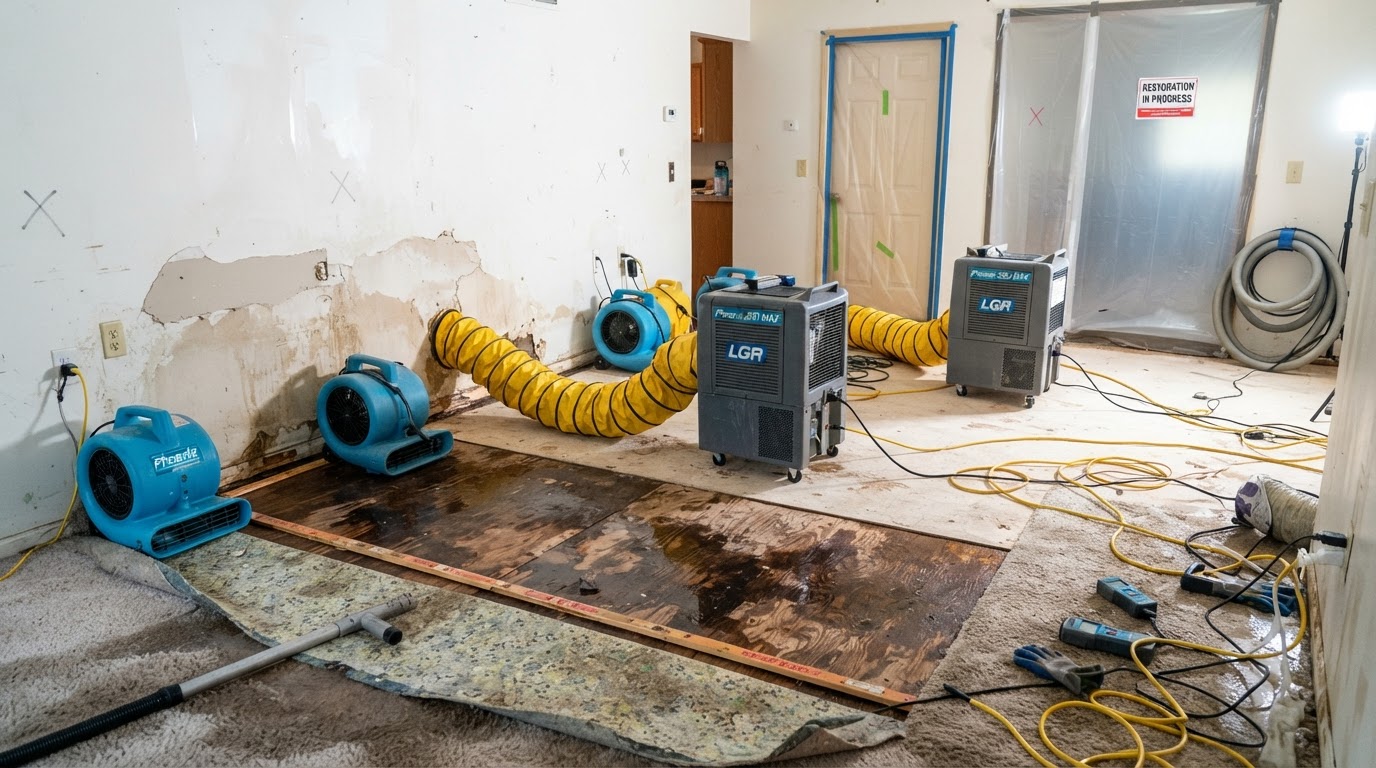
Structural drying uses a combination of air movement and humidity reduction. Air movers accelerate evaporation from wet surfaces; dehumidifiers pull the released moisture out of the air so it doesn't reabsorb elsewhere. The process is monitored and adjusted based on how the materials respond.
Materials that commonly hold moisture after a loss include:
- Wood framing, studs, and floor joists
- Drywall — especially the lower sections and the paper face
- Subflooring such as OSB, plywood, or plank
- Finished flooring — hardwood, laminate, and underlayment
- Baseboards, trim, and the back of cabinetry
- Insulation inside wall cavities
Not every material can be dried in place. Some need removal; others dry with directed air and dehumidification. The decision depends on the water source, saturation level, and exposure time.
Materials That May Retain Moisture After a Water Loss
After extraction, the structure can still hold a surprising amount of water. Understanding which materials tend to hold moisture helps explain why drying is a distinct phase.
Commonly Wet Materials
- • Drywall wicking moisture upward from the floor
- • Wood studs and joists holding bound water
- • OSB and plywood subfloors
- • Hardwood planks that cup when wet
- • Fiberglass or cellulose insulation
- • Cabinetry backs and toe kicks
Drying Considerations
- • Wall cavities may need opening to dry
- • Underlayment under flooring can stay wet
- • Concrete slabs release moisture slowly
- • Contamination may force removal over drying
- • Hardwood may need humid, not dry, conditions
We do not guarantee that every material can be dried in place — some, like saturated insulation or contaminated drywall, are removed. Drying decisions follow the conditions, not a fixed checklist.
How Structural Drying & Dehumidification Work
Drying is a balance of evaporation and humidity control. Wet materials release moisture into the surrounding air; dehumidification removes that moisture so the air keeps accepting more. Without dehumidification, evaporation slows and moisture can migrate to secondary materials.
SET UP
Position air movers and dehumidifiers for the affected materials.
EVAPORATE
Air movement drives moisture out of wet framing and drywall.
DEHUMIDIFY
Pull released moisture from the air to keep drying going.
MONITOR
Check moisture levels and adjust equipment until targets are met.
Moisture is tracked across the affected area so drying equipment is repositioned as materials dry unevenly. We describe these techniques conceptually and do not claim ownership of a specific inventory of meters, cameras, or dehumidifiers unless confirmed.
Why a Surface Can Feel Dry While Moisture Remains
The most common reason water damage reappears later is that a surface felt dry to the touch while the material behind it was still wet. Drywall feels dry on the painted face while the paper backing and the stud behind it hold moisture. Hardwood planks feel dry on top while the subfloor below stays saturated.
That gap between surface feel and actual moisture is exactly what structural drying is meant to close. Measuring moisture across the structure — not just where the water was visible — is what confirms the loss is actually resolved before repairs begin.
Structural drying usually follows emergency water extraction and is relevant across flood damage cleanup, burst pipe cleanup, and hidden wall & ceiling moisture. Learn more on our About page or reach us through the Contact page.
Active water emergency in Huntsville?
The sooner water is removed and drying begins, the less secondary damage there is to address.
Frequently Asked Questions About Structural Drying & Dehumidification in Huntsville
Need Structural Drying in Huntsville? Call for Moisture Help
Huntsville Water Damage Restoration provides 24/7 water removal, extraction, and structural drying across Huntsville, AL 35810 and surrounding North Alabama communities.
Serving Huntsville, AL 35810 and surrounding North Alabama communities.
Request Help
Fill out this quick form for fast contact from our dispatch team.